
From the Editor: Arrested Developments
Week 158: January 3 to January 9, 1864

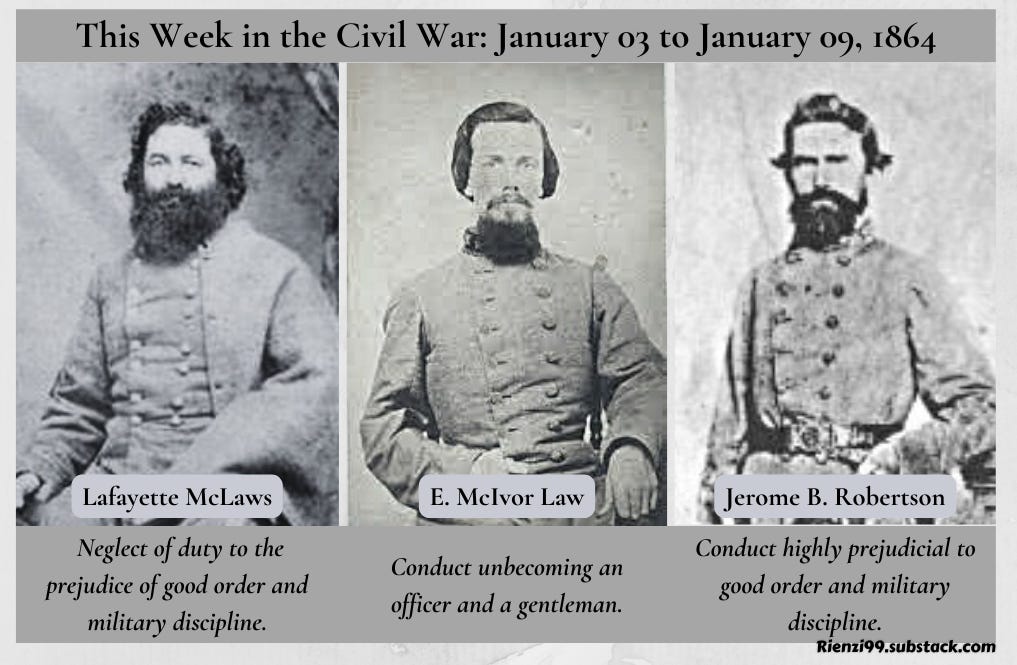
From the editor: During James Longstreet's long tenure as Robert E. Lee's second-in-command in the Army of Northern Virginia, he mirrored his commander's equanimity and equipoise. However, this changed after Longstreet traveled to Georgia and Tennessee. Accustomed to having Lee's confidence, Longstreet was put off by Braxton Bragg's cold and distant demeanor. Longstreet returned Bragg's disdain and repaid his new commander by adding his voice to those who sought Bragg's removal from the army. Nevertheless, when Longstreet was given a semi-independent command in East Tennessee, he showed that he had more in common with Bragg than he cared to admit.
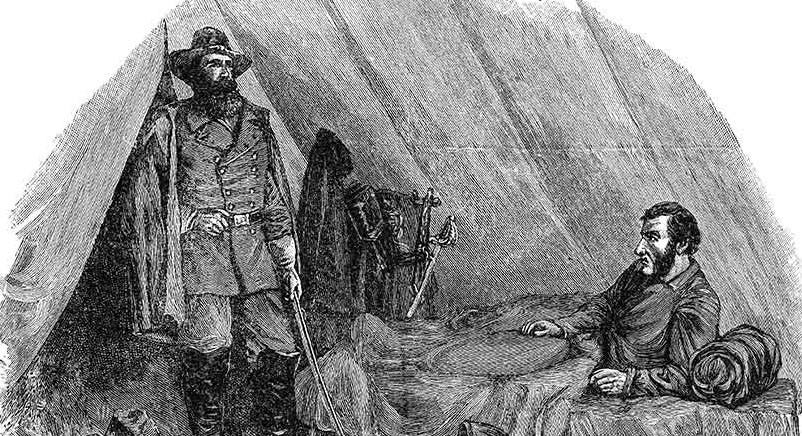
Disconcerted by his failure to capture Knoxville, Longstreet, like Bragg after Chickamauga, sought to shift the blame onto his subordinates. Longstreet relieved his own second-in-command Lafayette McLaws, explaining that he “exhibited a want of confidence in the efforts and plans [of the] commanding general,” despite the fact that McLaws was a childhood friend and a West Point classmate. In addition, Jerome B. Robertson, commander of the Texas Brigade, was arrested “for conduct highly prejudicial to good order and military discipline.” And finally, there is the strange case of E. McIvor Law, the ‘Little Gamecock.’ Despite the fact that Law had served in John Bell Hood's division longer than any other brigadier, Longstreet actively campaigned for Micah Jenkins to become the divisional commander. Instead, Law resigned his commission rather than serve under Jenkins, and then changed his mind after being given permission to travel to the War Department in Richmond to deliver his resignation in person. Longstreet responded by having Law arrested for obtaining leave under false pretenses.
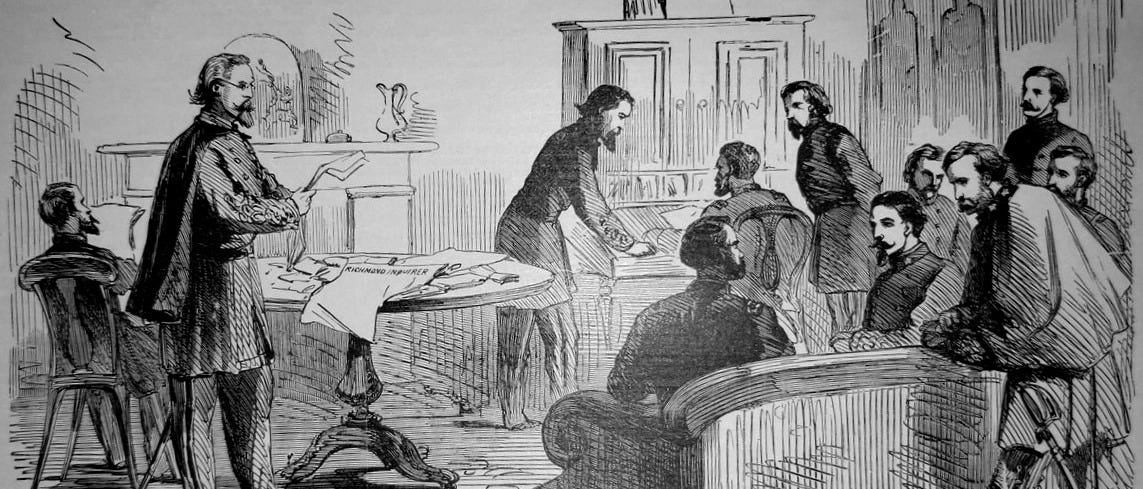
Well aware that his actions reflect as poorly on his own ability to command as upon his subordinates, Longstreet also sent his own request to be relieved to War Department. While Confederate President Davis and Secretary of War Seddon took his request seriously, the scarcity of qualified corps-level commanders preclude any immediate changes. After three long years of war, this deficiency has become so serious that Robert E. Lee, already concerned about the performance of his own corps leaders Dick Ewell and A.P. Hill, is forced to admit: “I do not know anyone to take his place.”

To read the entire post, check out:
The Confederate command structure, despite what he have been told for decades, rarely -- if ever -- got it together to act as a unit. Too many jealousies and grudges. Chief among those with jealousies and grudges was Jefferson Davis.
I’m guessing you could give us good info about the US Military Telegraph Corp. Maybe a photo of them in Lincoln’s War Room?
Thank you!