
Davis Addresses Congress
Special Edition (January 13, 1863)

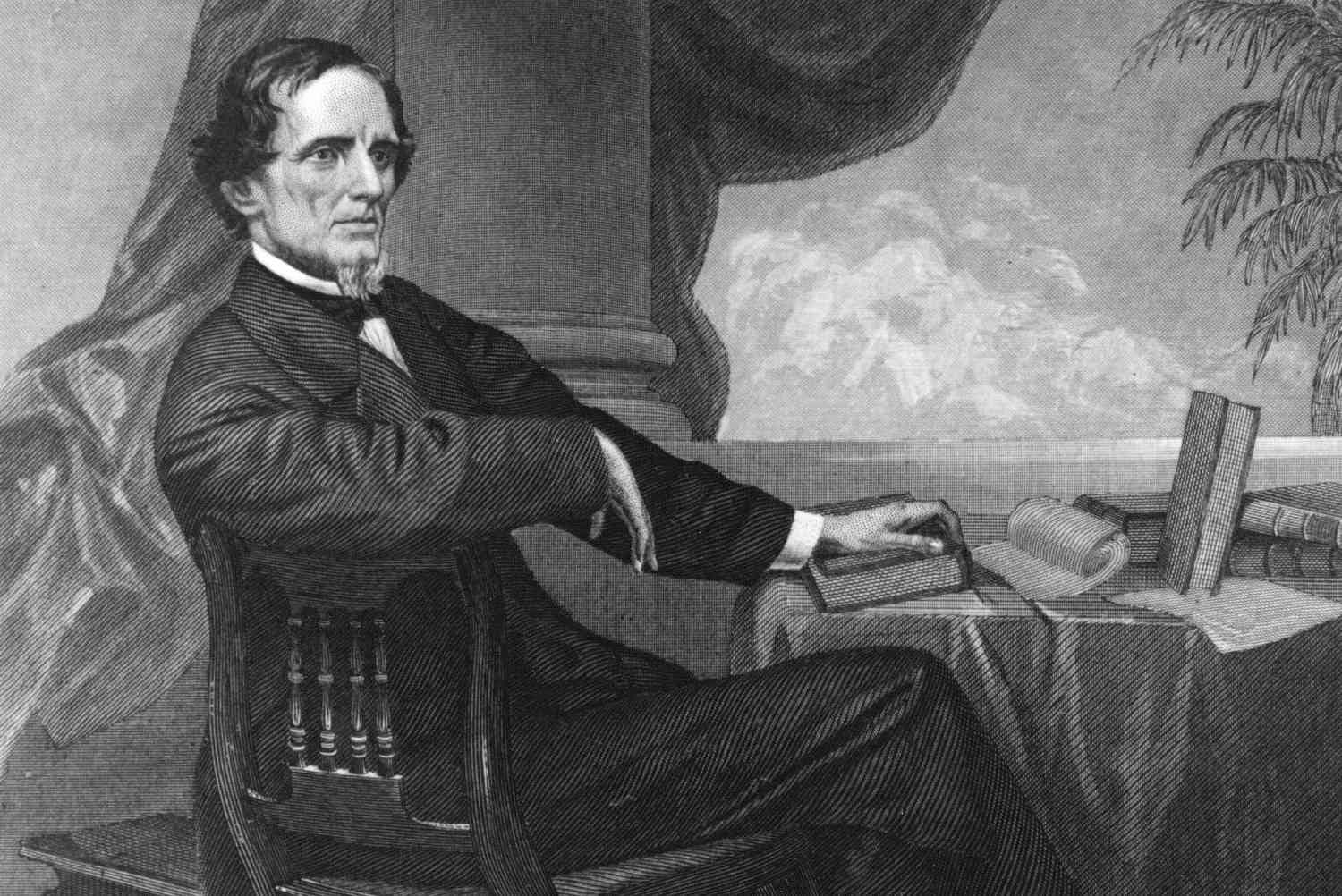
On January 13th, 1862, Confederate President Jefferson Davis released his annual message to the C.S. Congress in Richmond, Virginia. Davis had just returned from a month-long trip through the western part of the Confederacy and given speeches in Knoxville, Tennessee, Mobile, Alabama, Jackson, Mississippi, Columbia, South Carolina, and Raleigh, North Carolina. In these speeches, Davis invariably touched on President Lincoln’s recent Emancipation Proclamation, which has irrevocably changed the tenor of the war. In the North, Lincoln’s detractors focus on the fact that the proclamation only covers slaves in Confederate occupied territory. But in the Confederacy, the proclamation has had a profound effect on the very basic tenets of their society.
Perhaps the most significant military impact is that the proclamation opens up the Union Army to include newly freed slaves. General Robert E. Lee referenced the proclamation in a letter he wrote to Secretary of War James Seddon on January 10th. Lee stressed the “absolute necessity” of increasing the size of the Confederate Army and the “importance of making every exertion to put fresh troops in the field at once.” An unhappy Lee wrote: “In view of the vast increase of the forces of the enemy, of the savage and brutal policy he has proclaimed, which leaves us no alternative but success or degradation worse than death, if we would save the honor of our families from pollution, our social system from destruction, let every effort be made, every means be employed, to fill and maintain the ranks of our armies, until God, in his mercy, shall bless us with the establishment of our independence.”
President Davis’ initial response, released before Christmas, was in a proclamation that dealt mainly with the perceived crimes of Union General Benjamin Butler in New Orleans. But, Davis did acknowledge the threat posed by black Union soldiers by declaring they (and their white officers) will be turned over to state authorities, rather than treated as prisoners of war. In his December proclamation, Davis charged that the Emancipation Proclamation was part of an effort to “excite servile war within the Confederacy.” As a member of the Southern Chivalry, Davis knows first-hand the existential dread of a potential slave rebellion. The fear that Davis and his fellow slave-owners feel also permeates his message to the C.S. Congress, in which he argues that President Lincoln “can have no other purpose than revenge and thirst for blood and plunder of private property.”
In his January 13th message, Davis refers directly to the Emancipation Proclamation as a “measure by which several millions of human beings of an inferior race, peaceful and contented laborers in their sphere, are doomed to extermination, while at the same time they are encouraged to a general assassination of their masters.” As a direct result, Davis promises to “deliver to the several State authorities all commissioned officers of the United States that may hereafter be captured by our forces in any of the States embraced in the proclamation, that they may be dealt with in accordance with the laws of those States providing for the punishment of criminals engaged in exciting servile insurrection.” Since the punishment for inciting a slave uprising in every Confederate state is death by hanging, Davis is promising the death penalty to all Union officers who are captured while fighting in territory currently held by C.S. forces. However, Davis does offer relief to the enlisted soldiers who will be treated as “unwilling instruments in the commission of these crimes.” These men shall be discharged “on the proper and usual parole.” Davis concludes, “[The Emancipation Proclamation] has established a state of things which can lead to but one of three possible consequences--the extermination of the slaves, the exile of the whole white population from the Confederacy, or absolute and total separation of these States from the United States.”
